
Reimaging the User Management Experience:
Maximo Application Suite
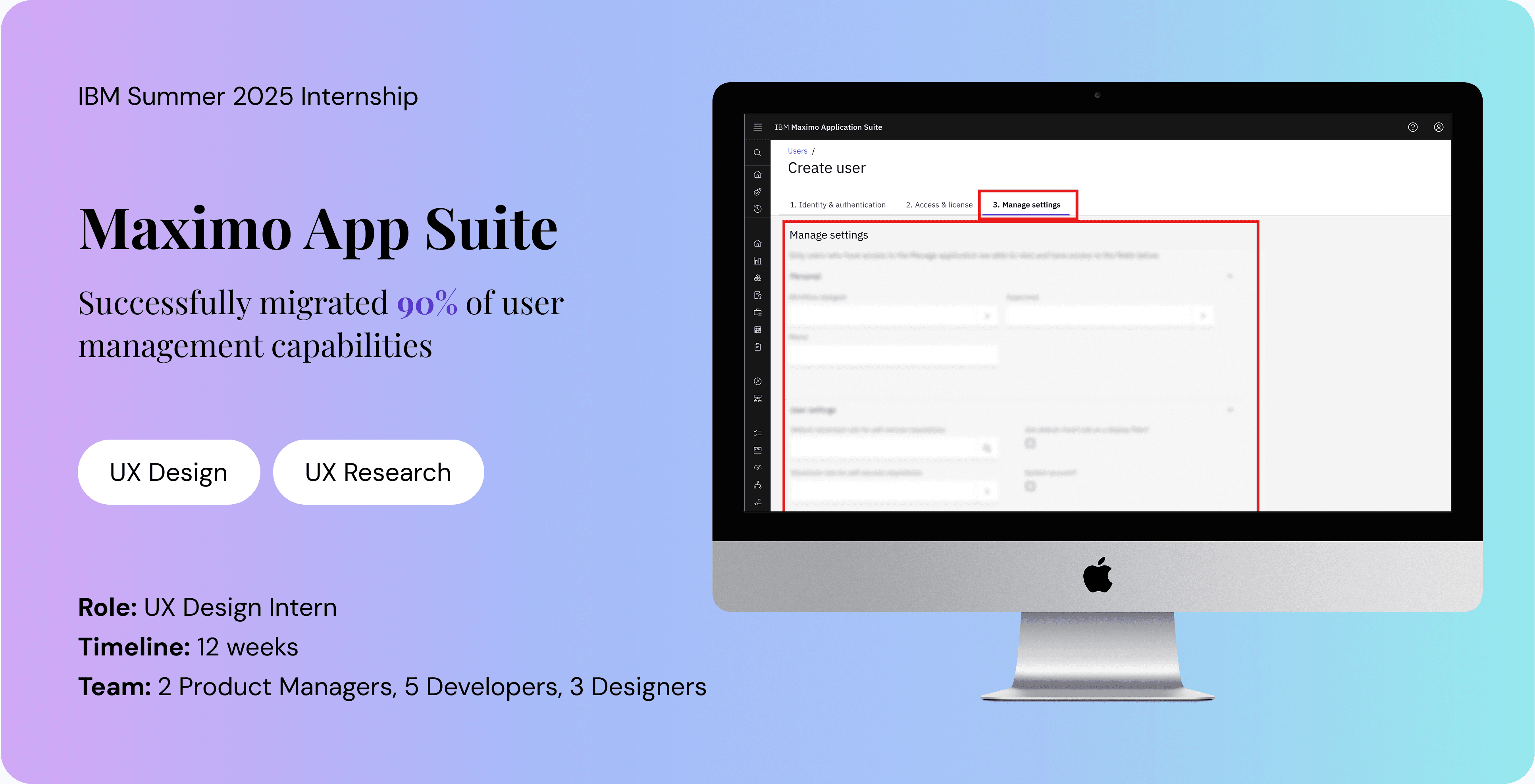
Maximo Application Suite (MAS) is a central platform for managing enterprise assets, operations, and maintenance.
Maximo is used by
4500+
~ 60%
customers located in the US
OVERVIEW
Domain
Maximo Suite Administration is the process of how administrators setup and manage user roles, security groups across all MAS applications
Problem
Duplicated user data across legacy Manage UI and MAS, leading to data inconsistency and administrative burden of managing user information
Solution
Migrate user management capabilities from the legacy Manage UI to MAS to unify the user management experience
PROCESS
First, I compared the legacy Manage UI and MAS to identify
missing functionalities.
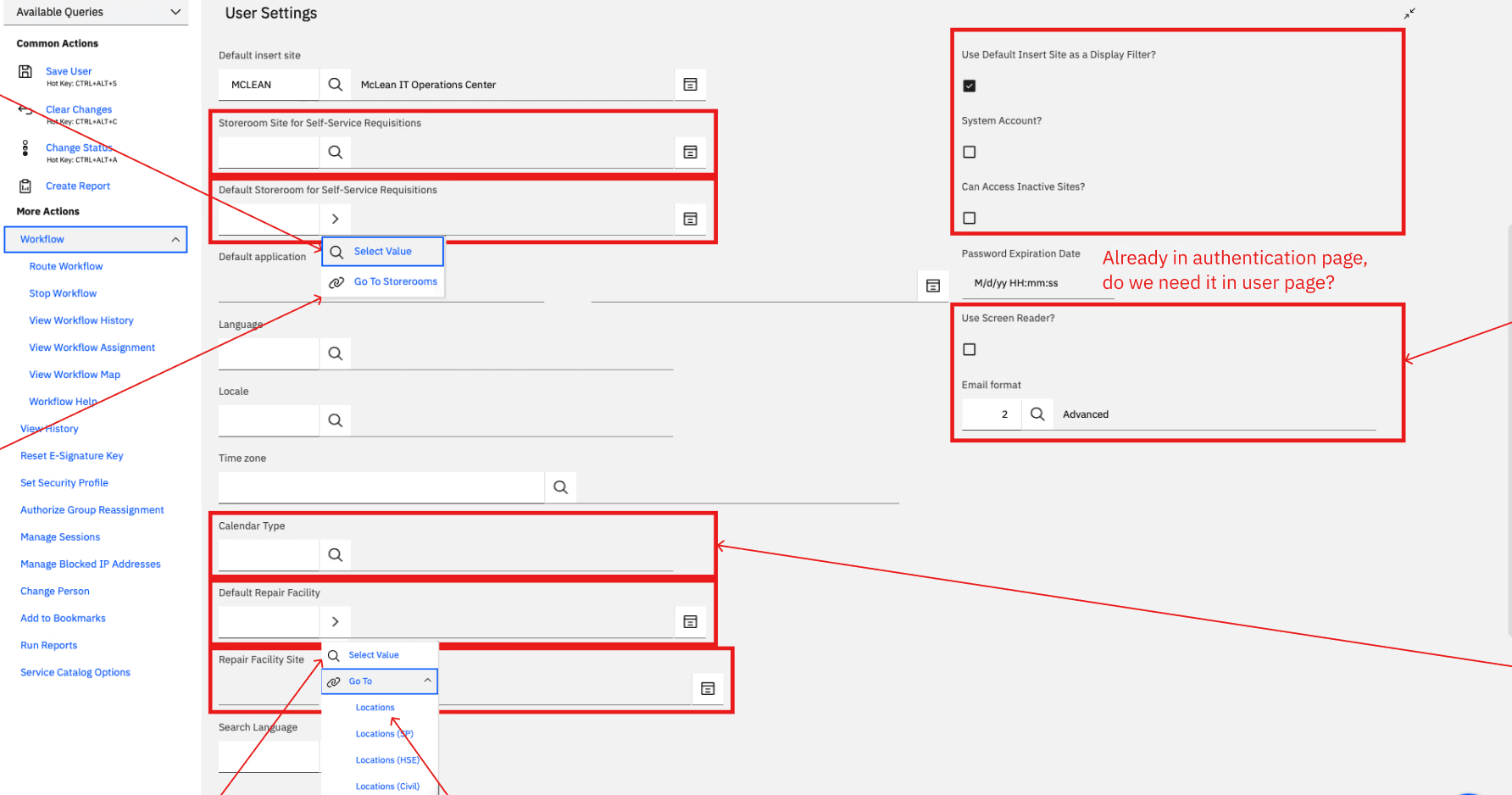
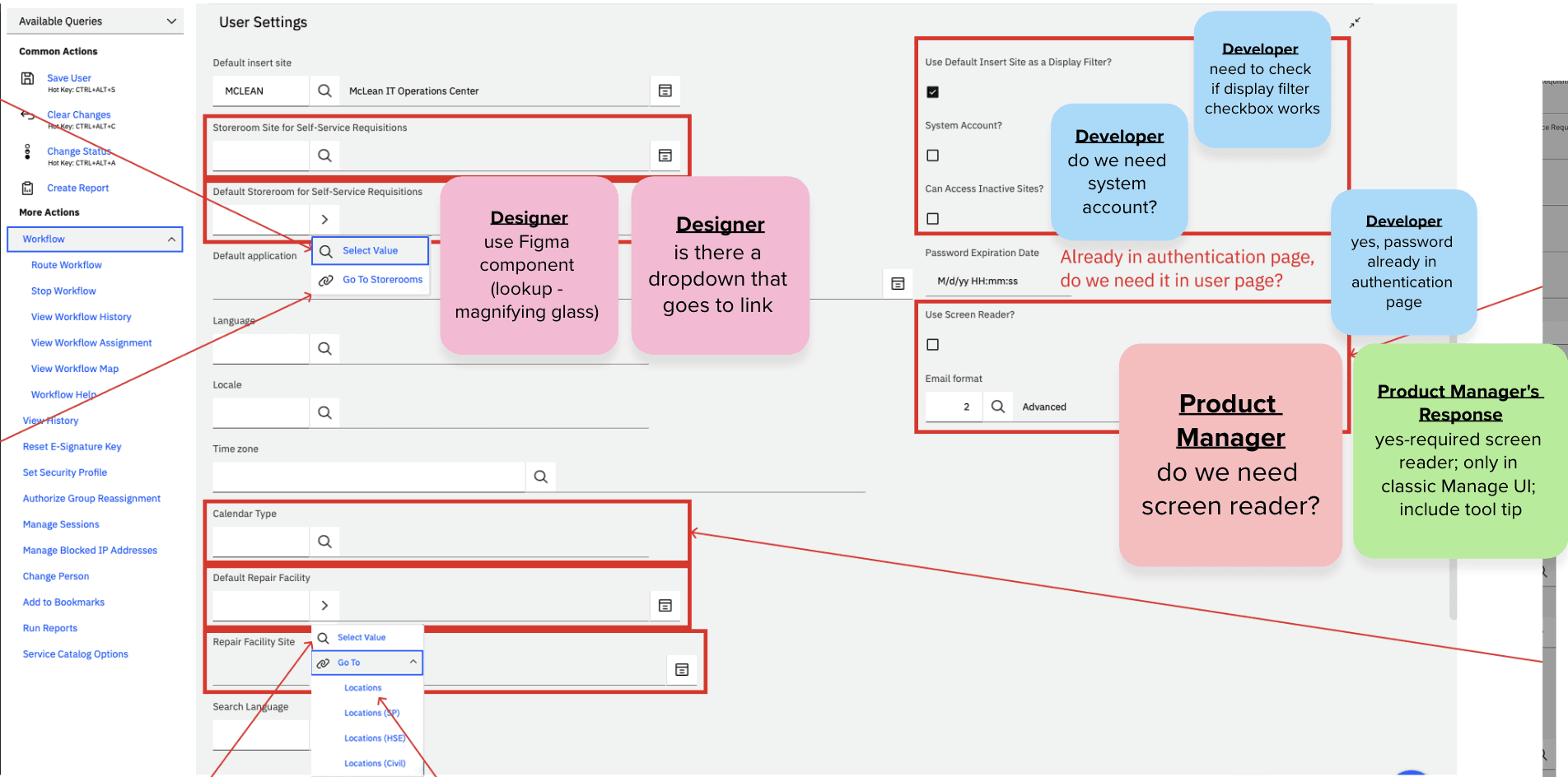
Following functionality prioritization, I brainstormed how to integrate them into the current design.
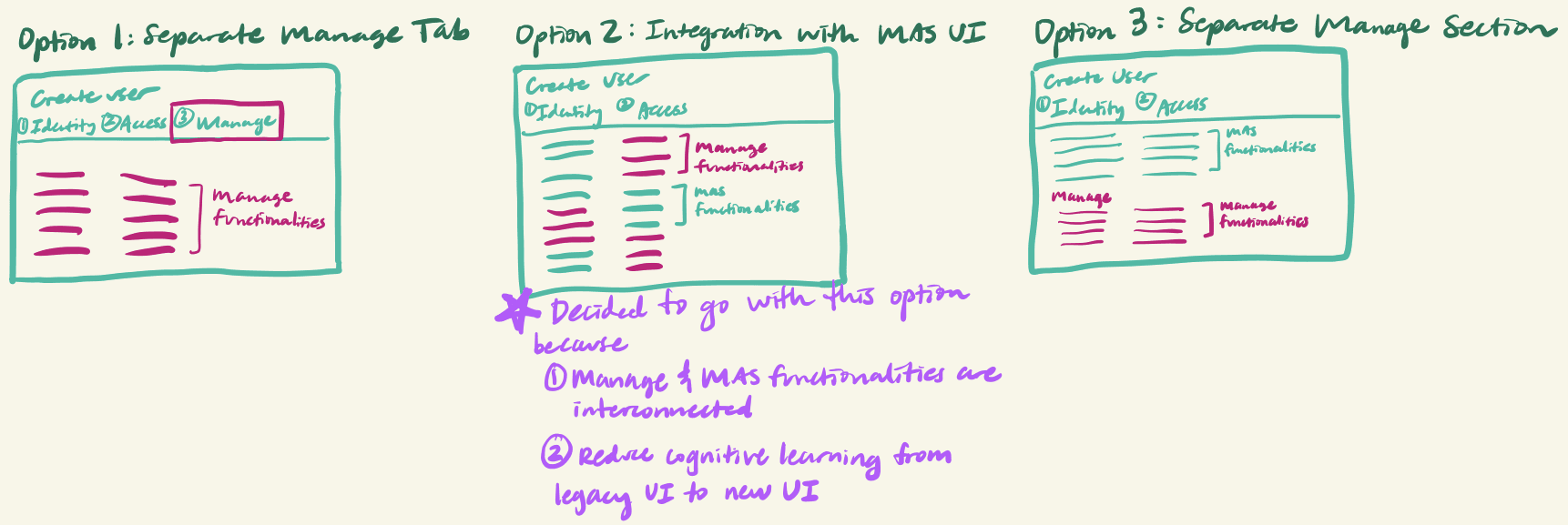
Integrating Manage functionalities into the MAS UI revealed many assumptions about how these functionalities should be placed.
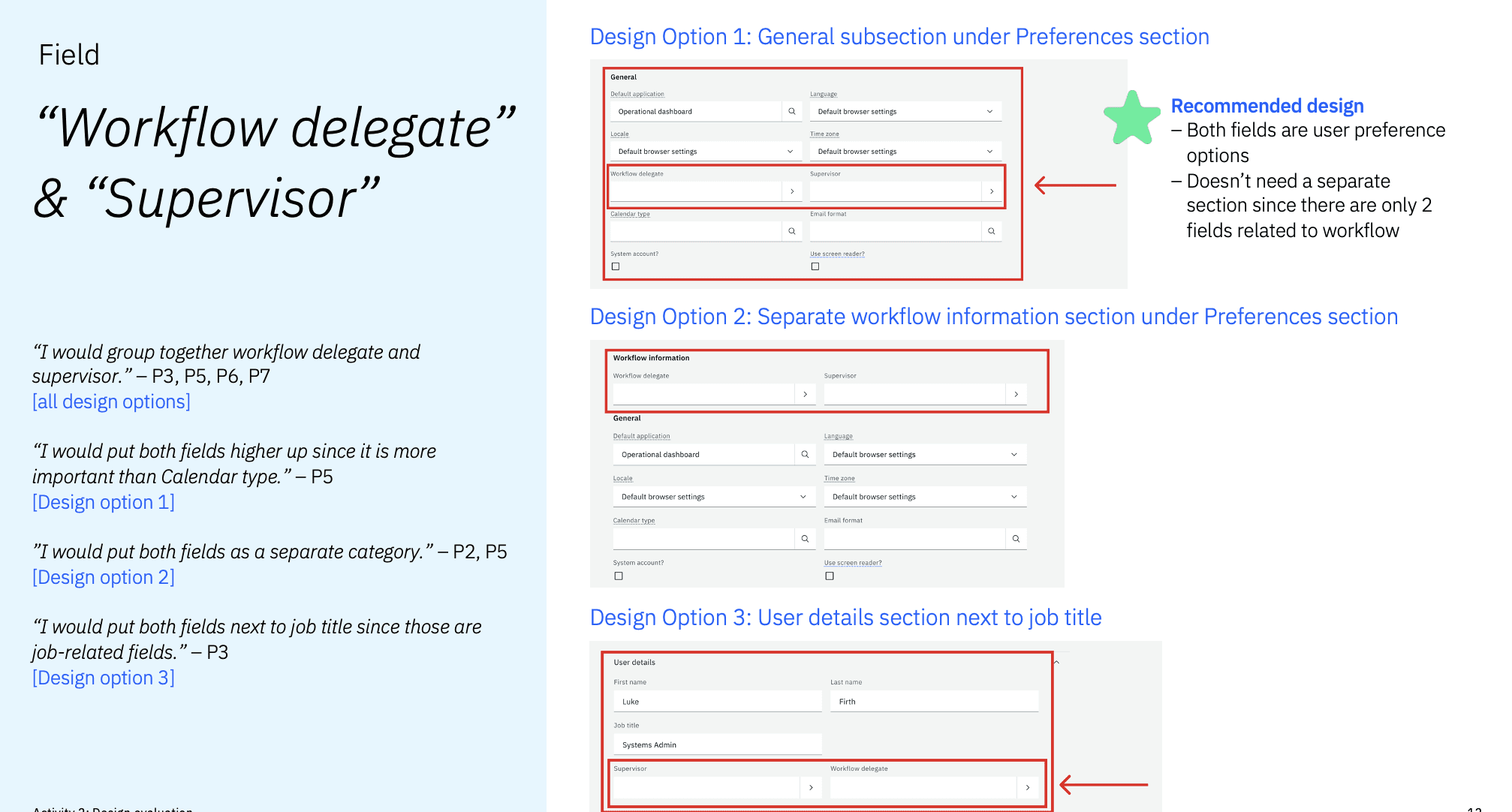
For instance, options included placing content in existing "Identity" or "Preferences" sections, or creating new subsections within them.
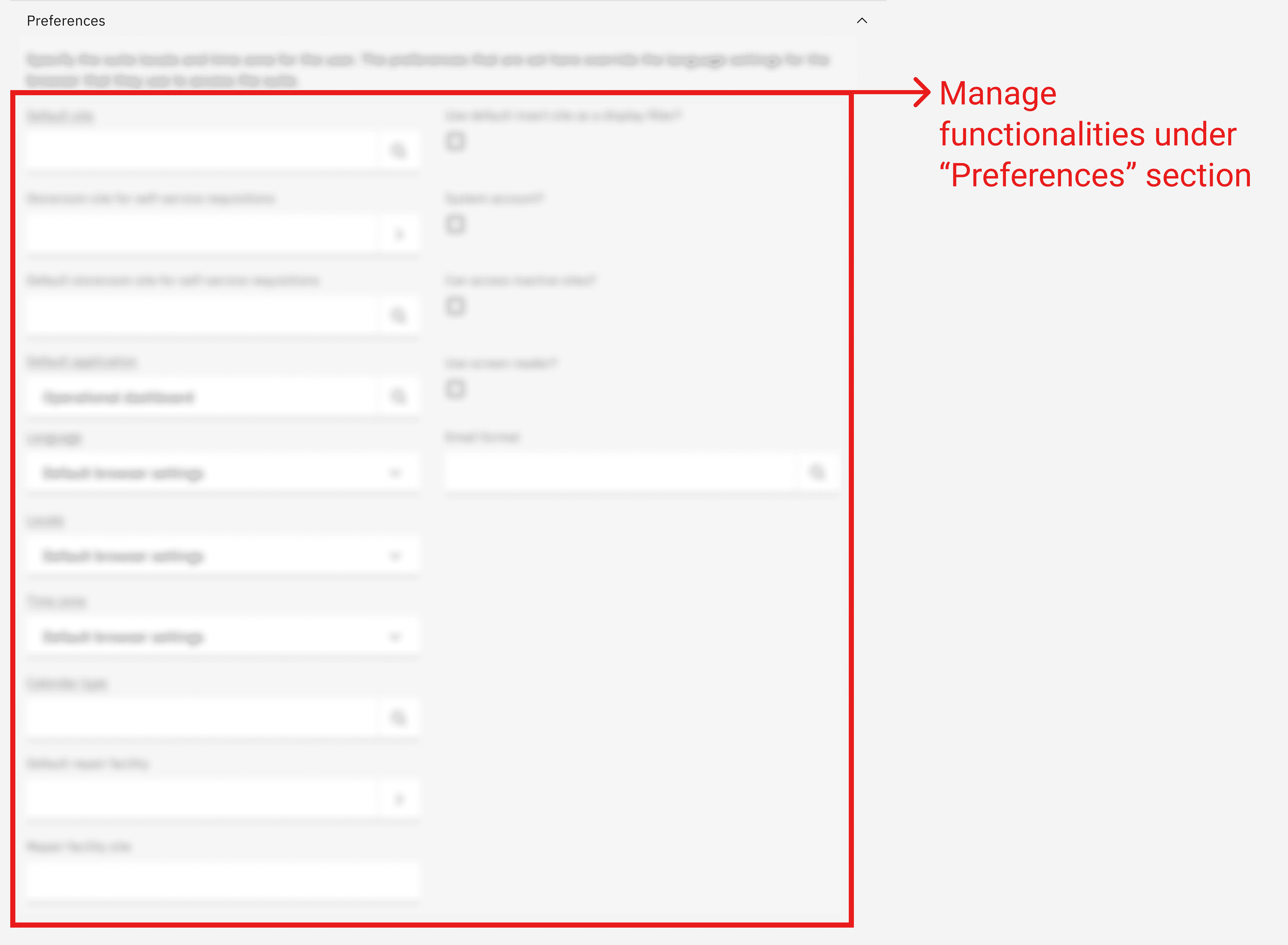
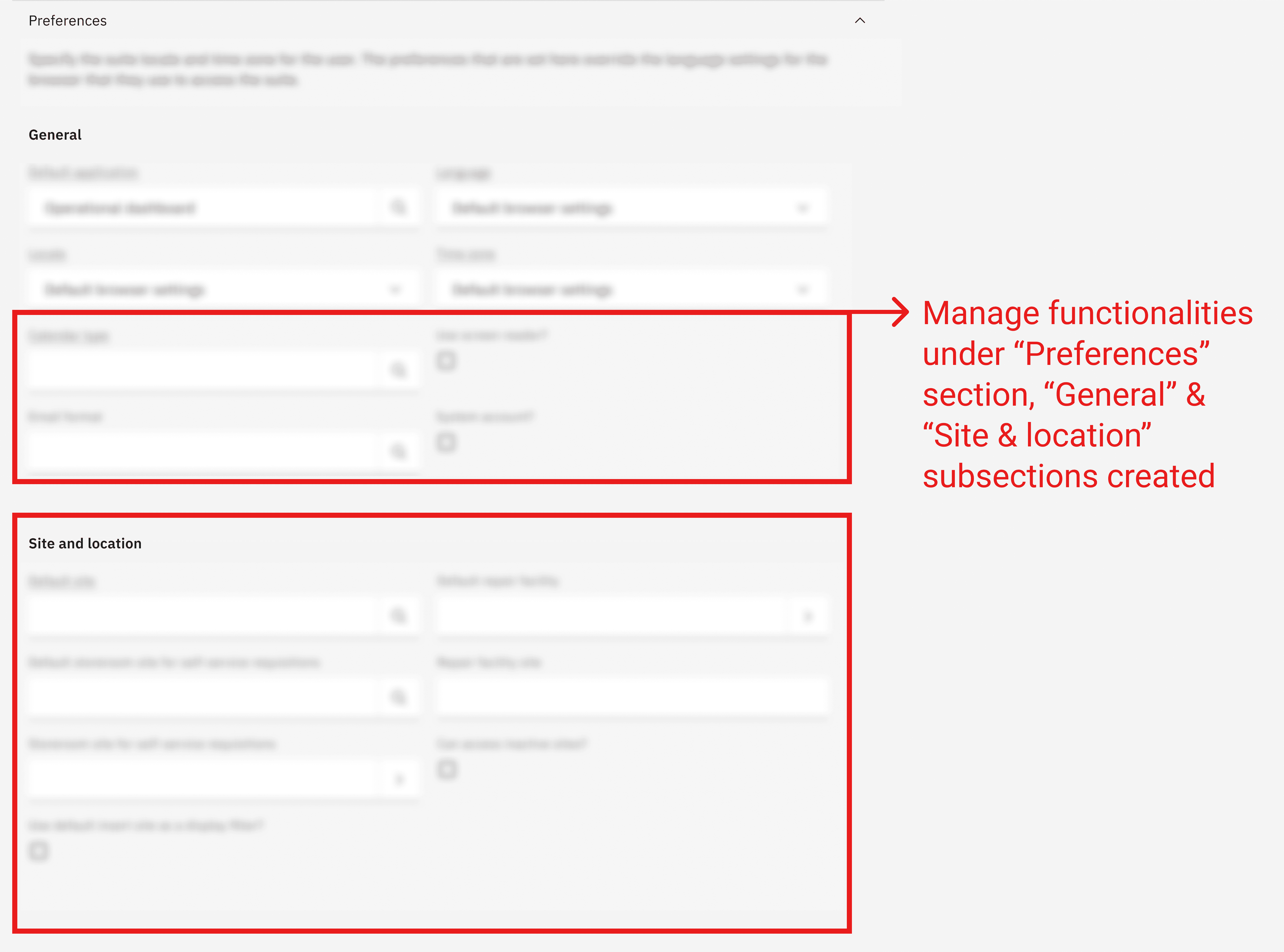

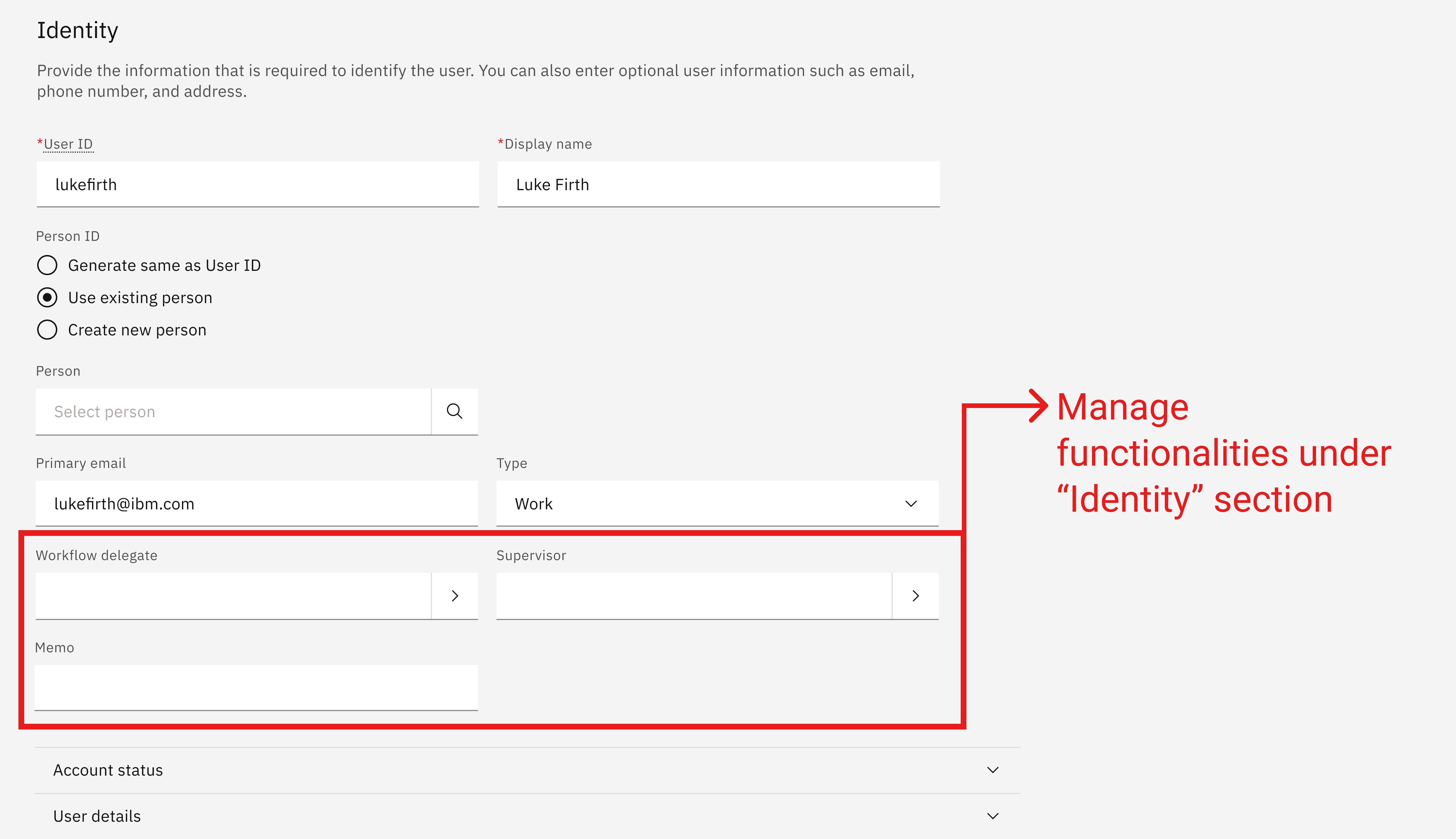
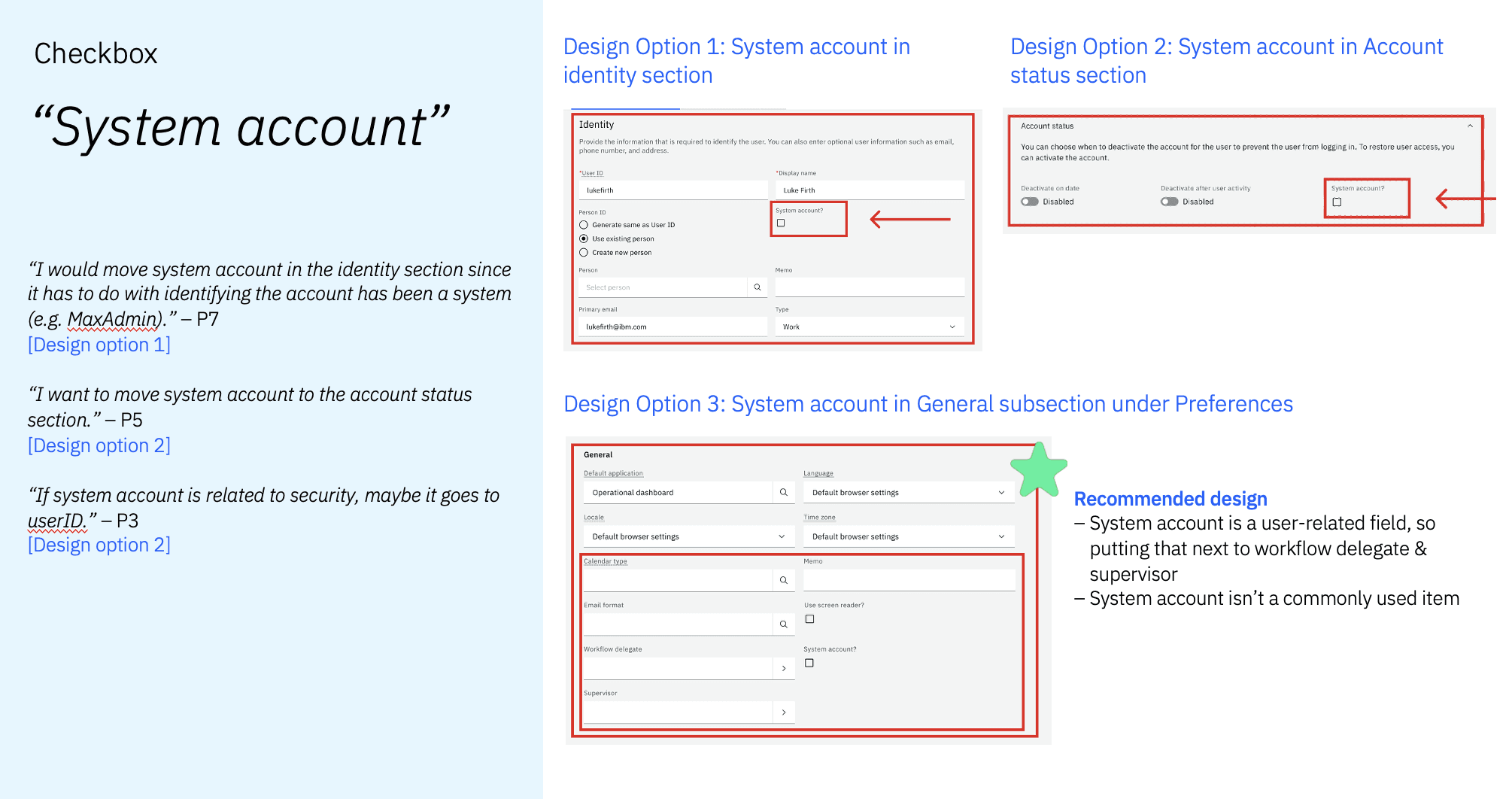
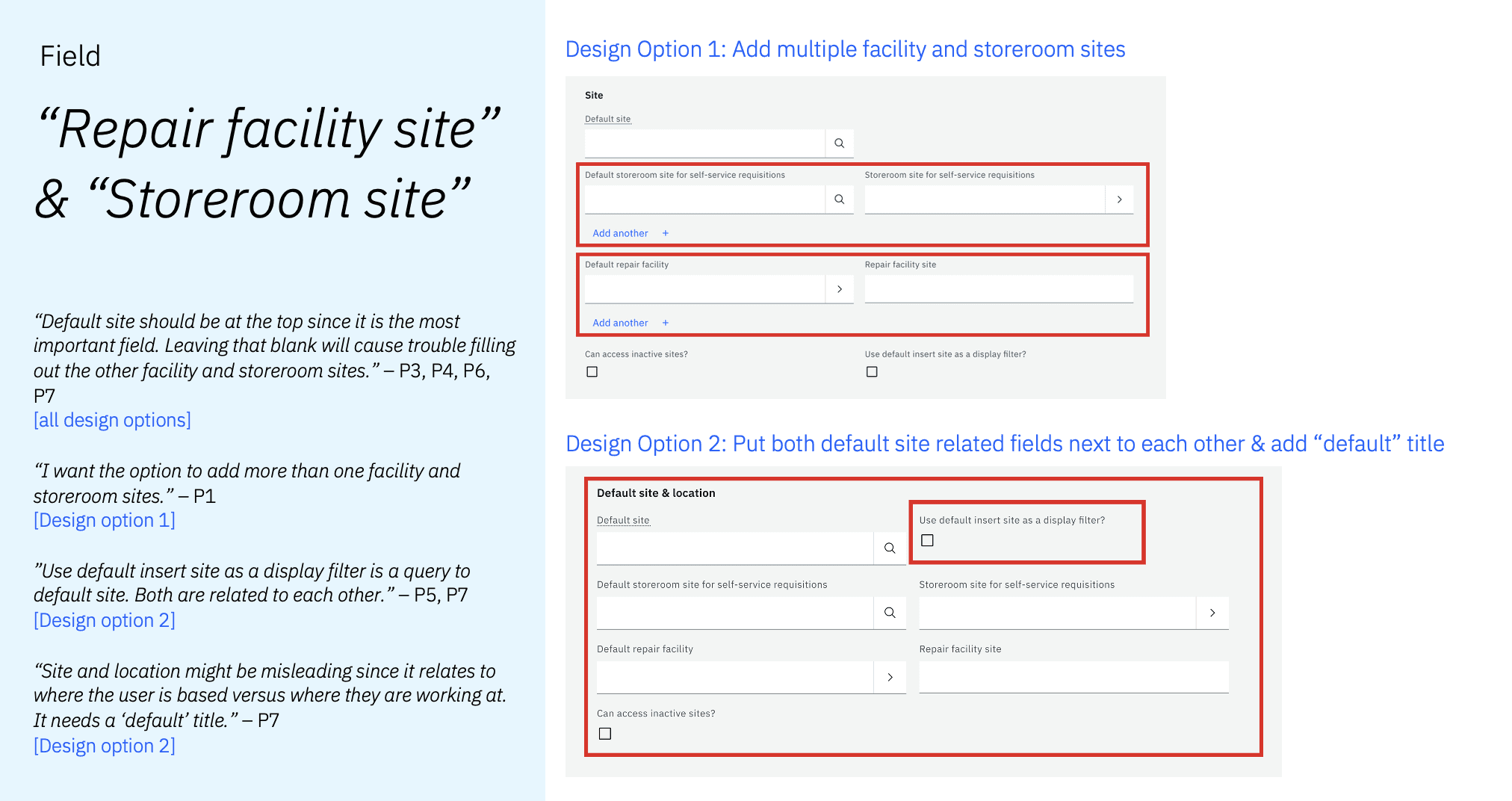
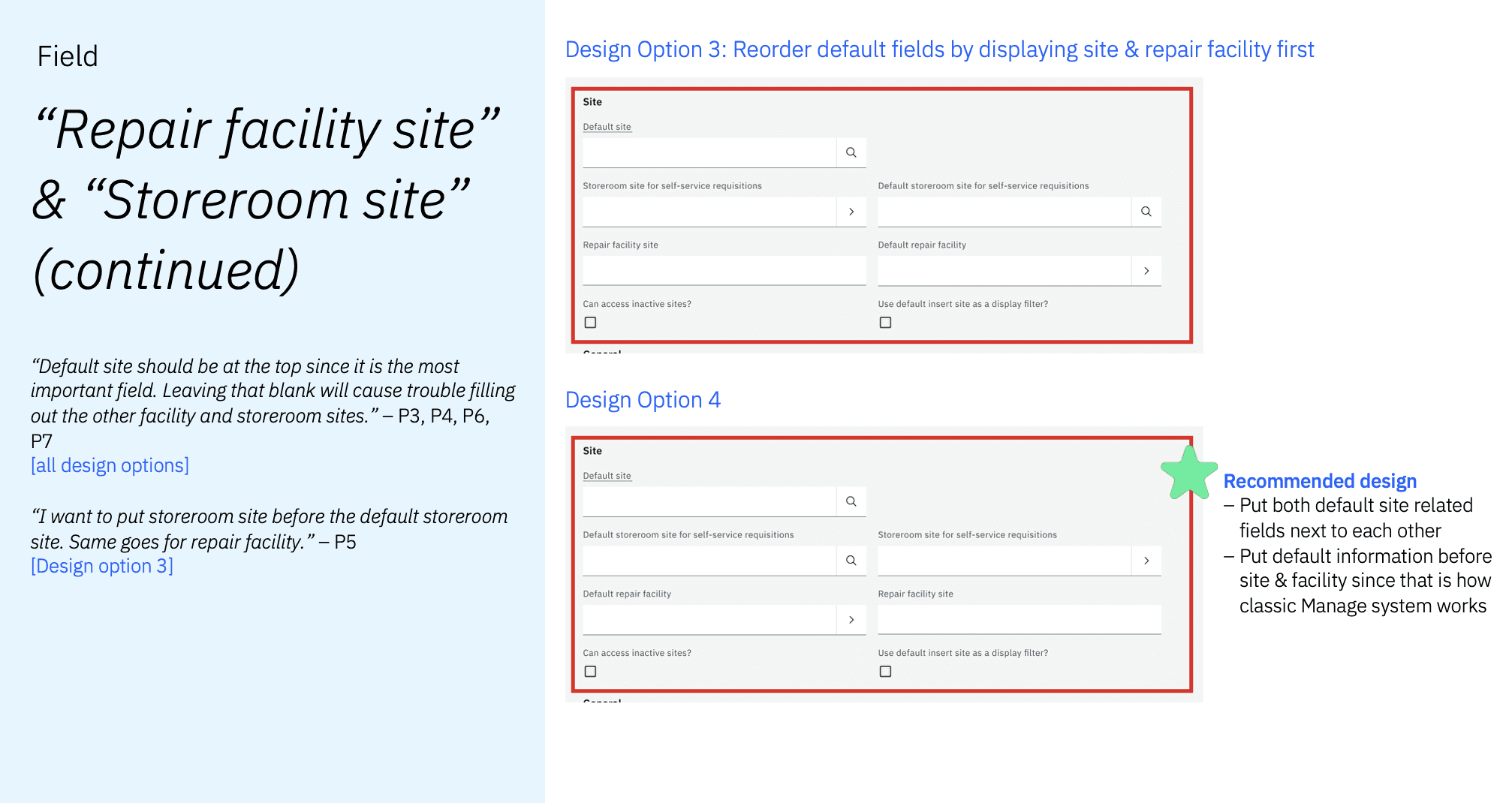
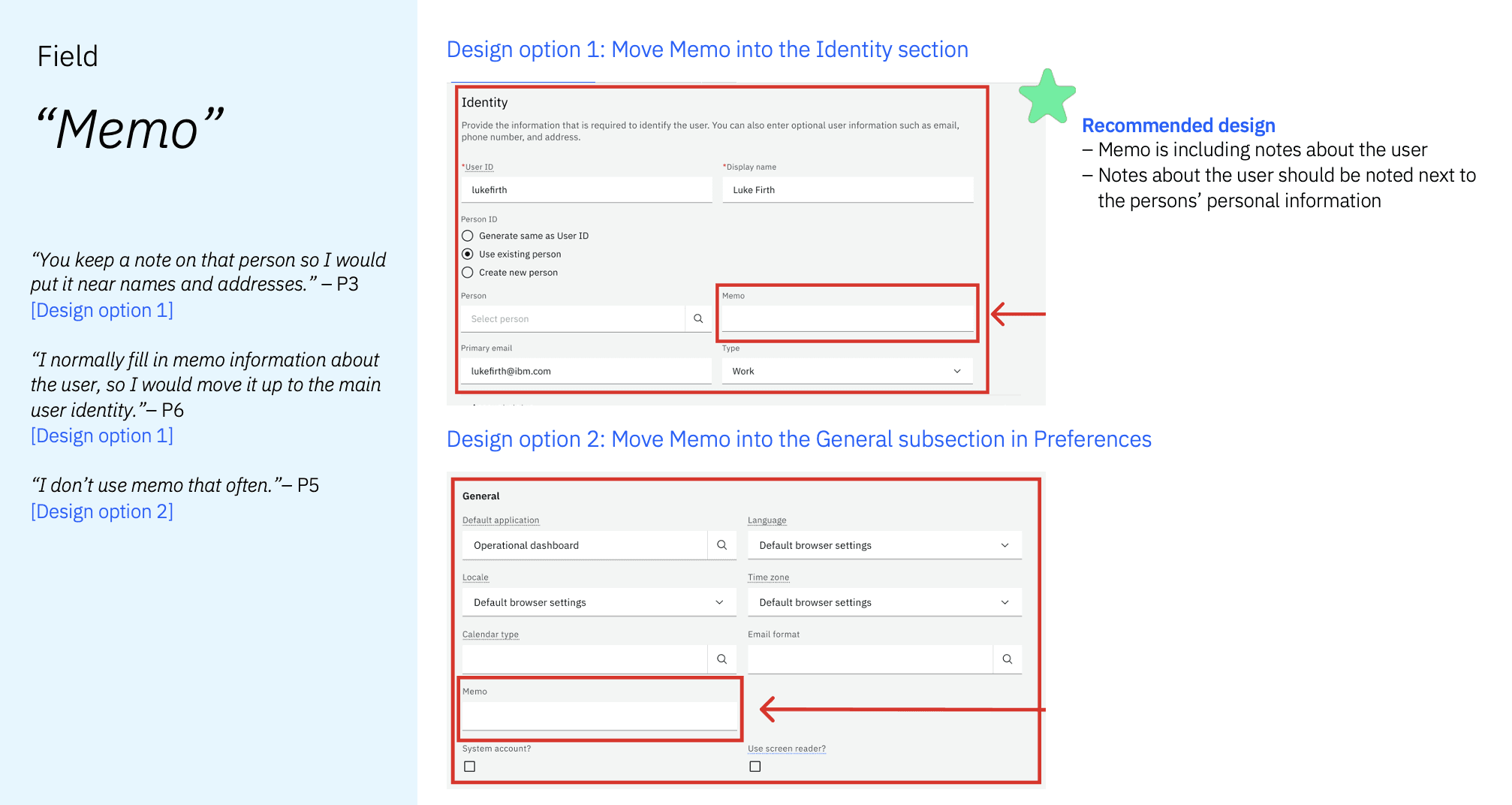
To eliminate assumptions in content structure, I conducted a card sort study to inform this migration so that the fields and functionalities placed align with user mental models.
CARD SORT RESEARCH STUDY
Objectives
Explore how users mentally organize and label user-related fields in the User tab of MAS
Align the User tab’s field organization with user expectations to support a seamless transition from the Manage Classic UI
Methodology
Open card sort study: identify how users intuitively group and label user management fields
Design evaluation: determine whether new field groupings improve efficiency for new MAS users
Participants
7 customers recruited from User Engagement Hub (UEH), previous user studies, referral from other customers
Companies: Projetech, Cohesive Group, USBR, Naviam, Charles River Laboratories, etc.
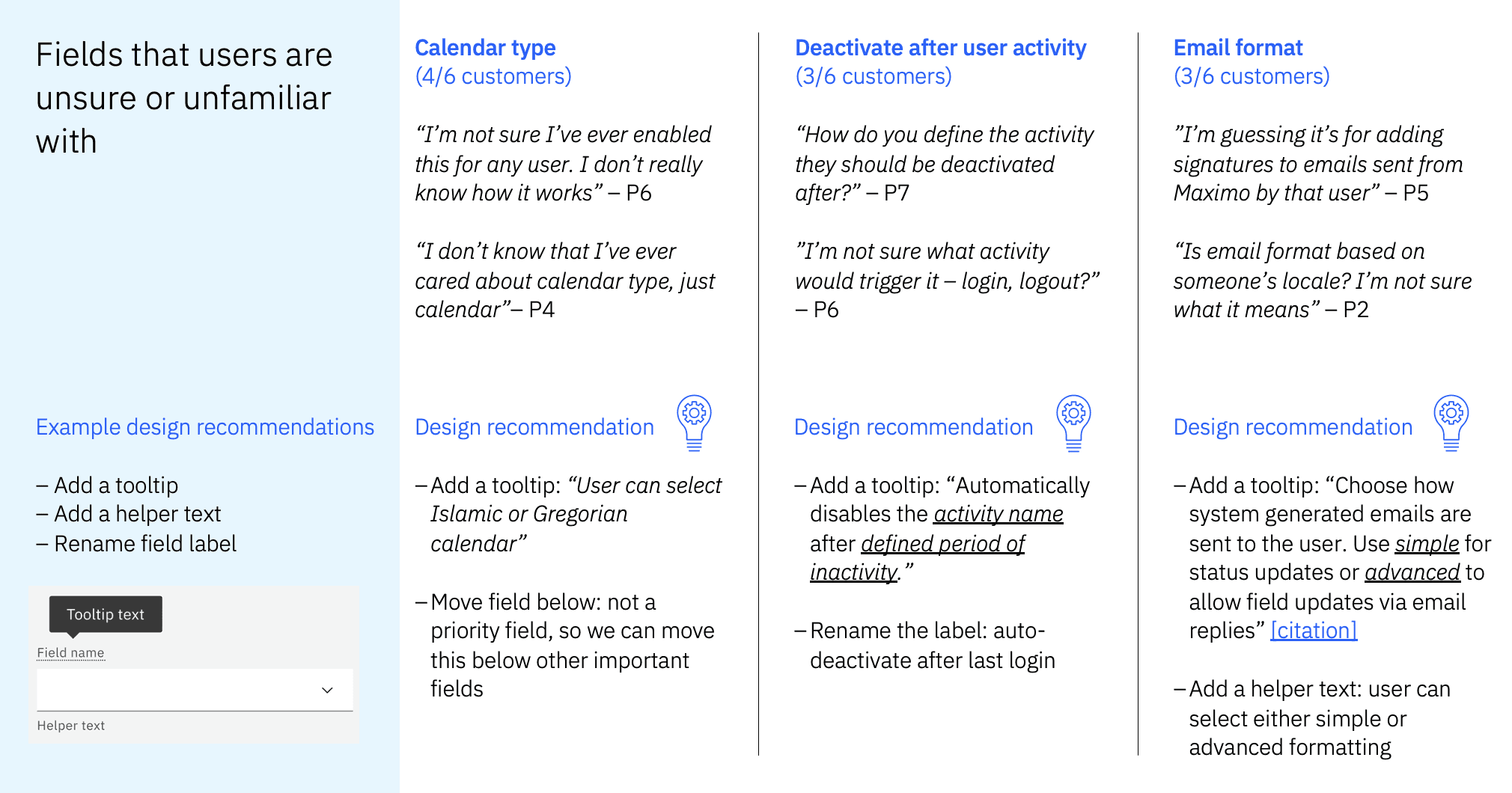
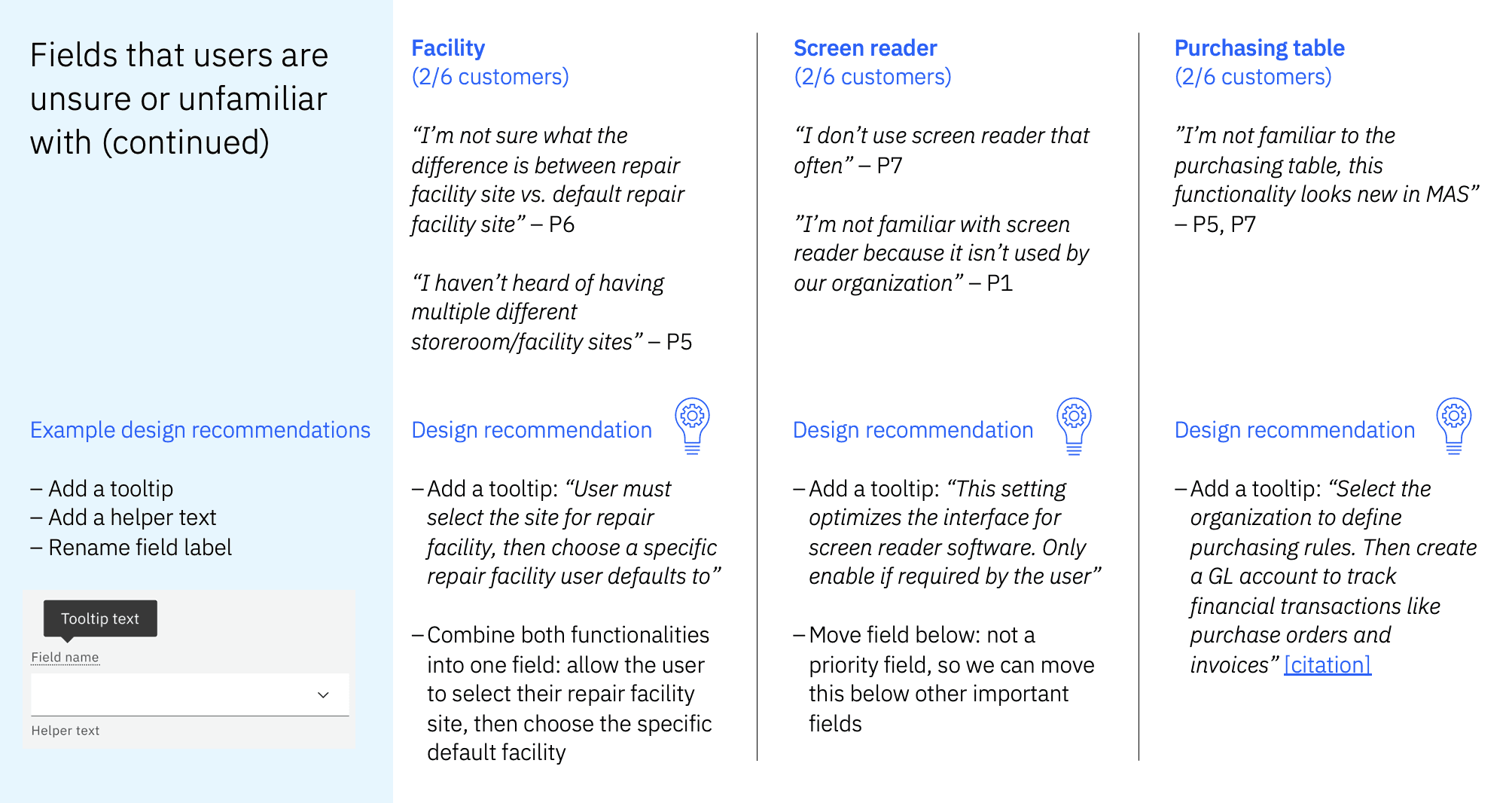
Research Findings
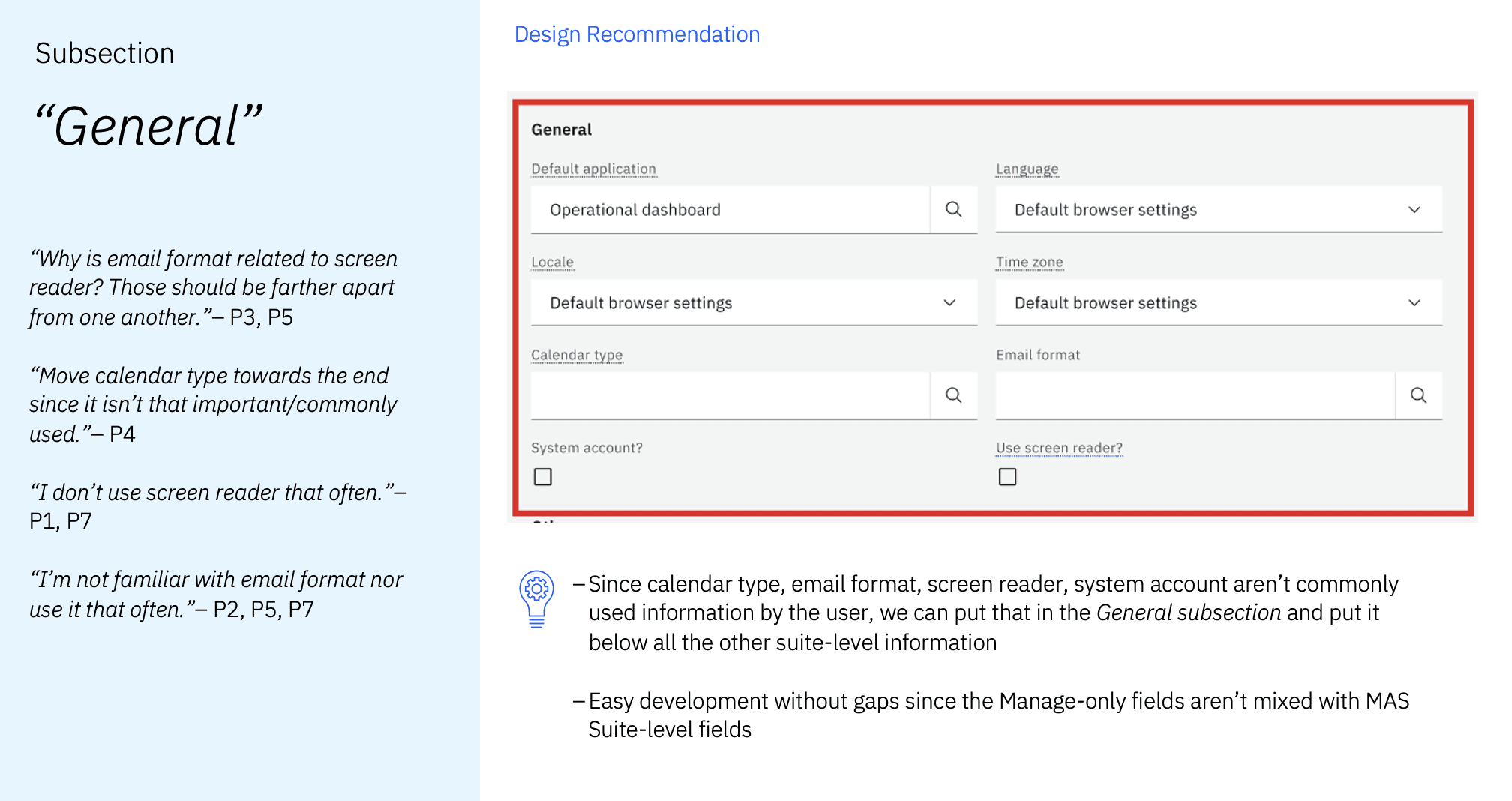
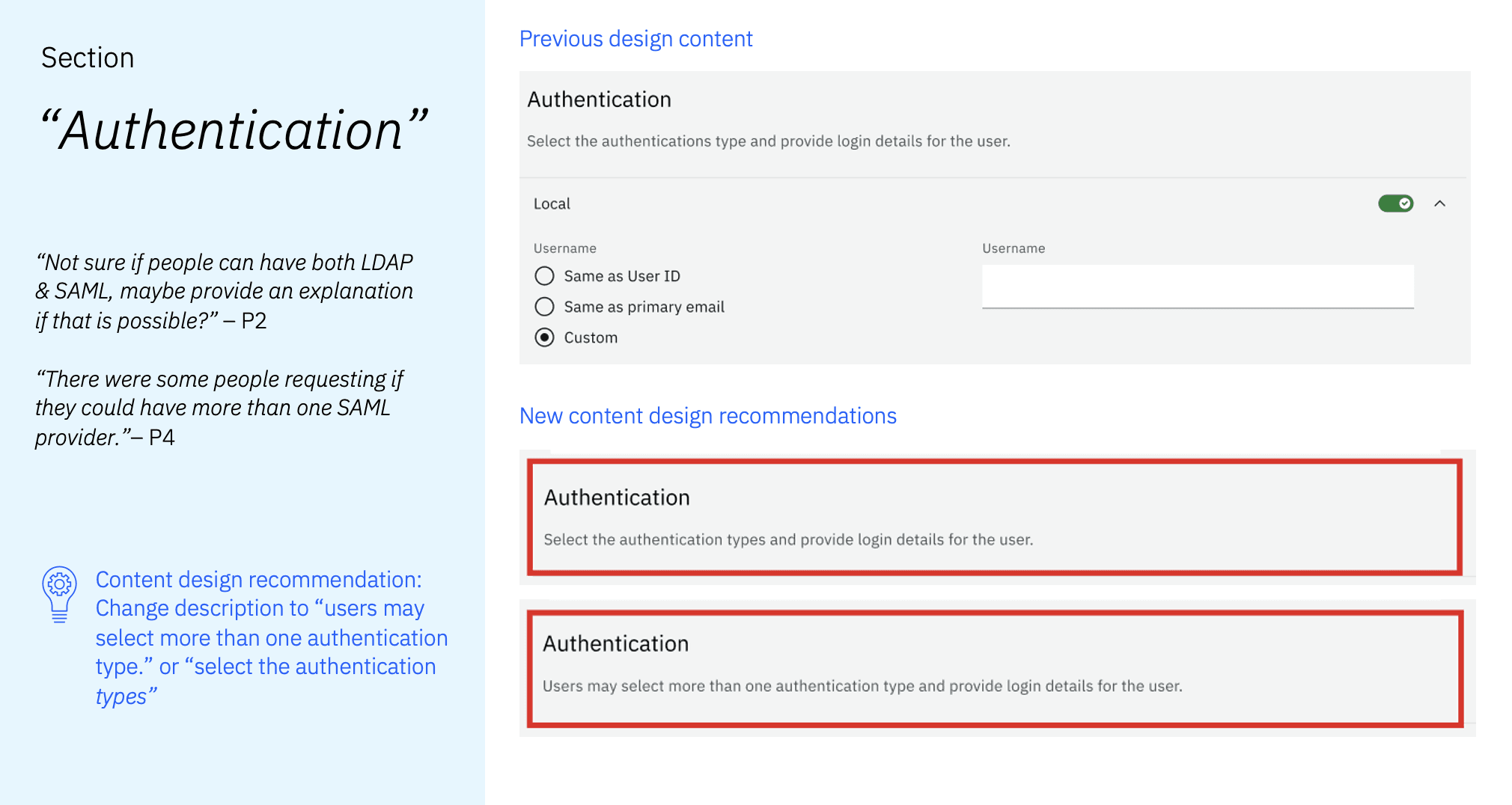
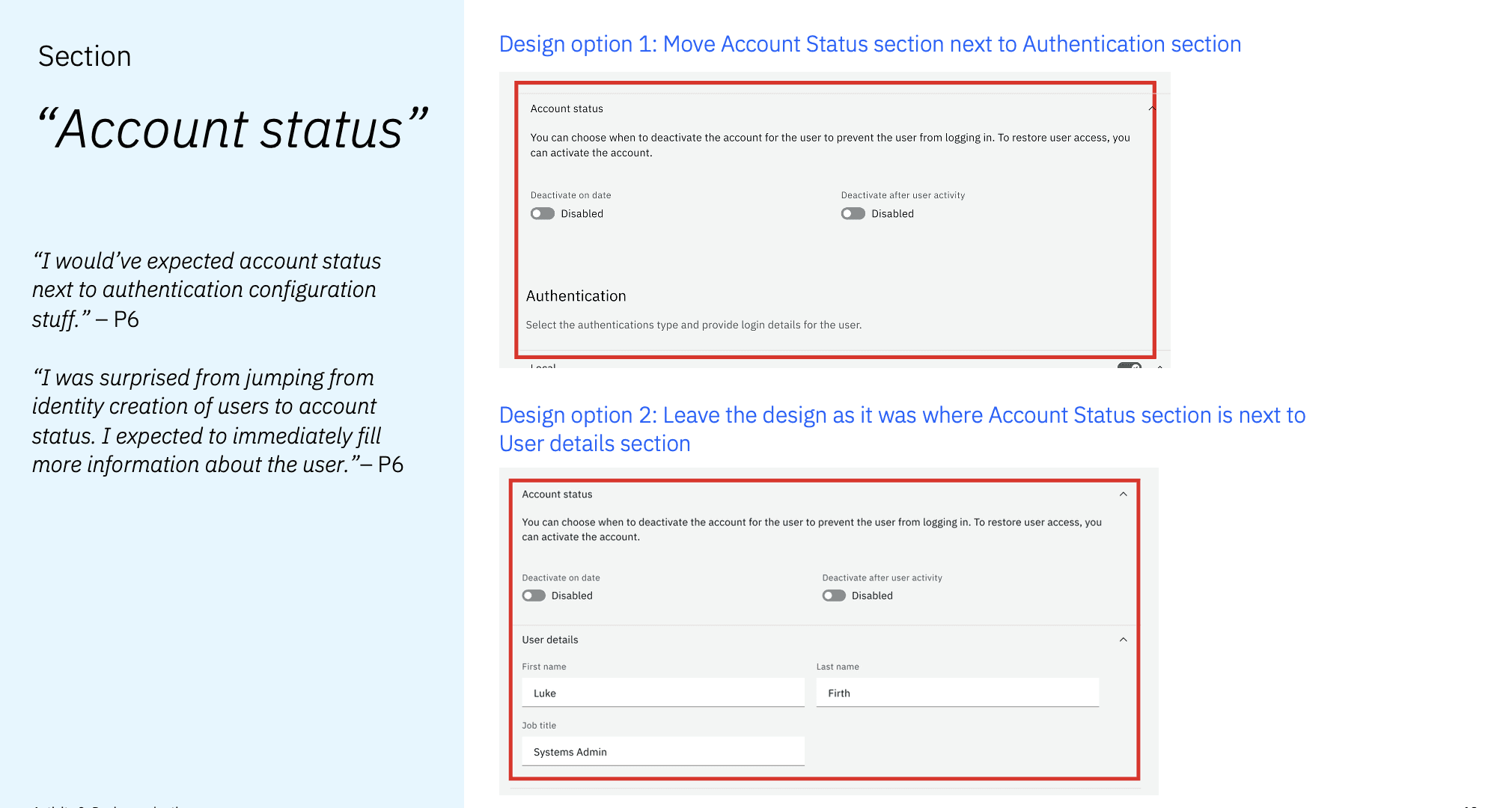
By leveraging my research findings, as a team, we collaborated and successfully migrated 90% of user management capabilities to MAS.
HI-FIDELITY DESIGNS
Due to NDA, the designs aren't available.
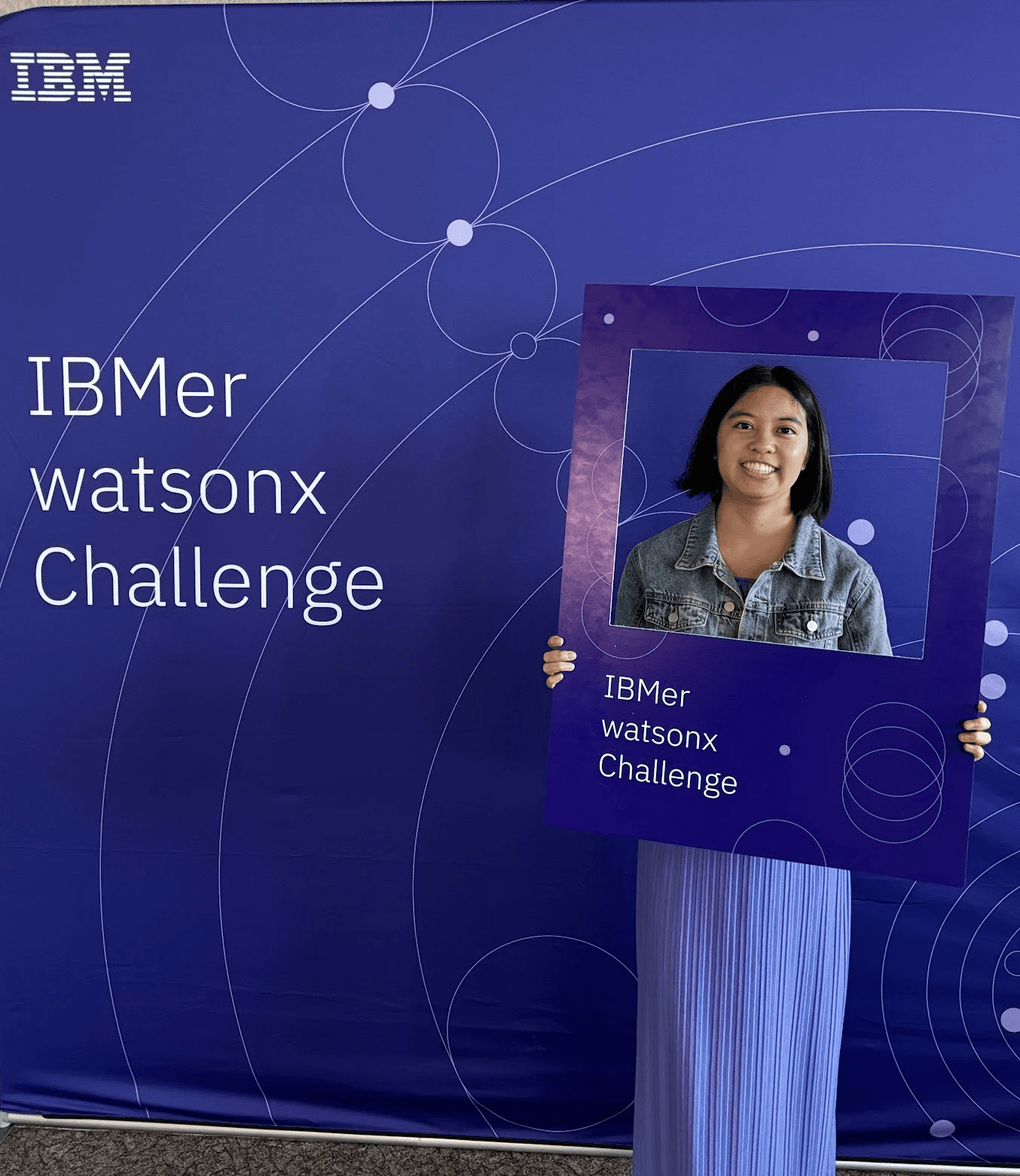
But Allison is.
KEY TAKEAWAYS
The value of building strong client relationships
Fosters trust for early feedback, saving costs and ensuring the right product is built. This also expands our participant recruitment and increases study engagement across the product team through client referrals. Below is a highlight of my participant recruitment process shared with the team.

Influential power in design to drive cross-functional team collaboration
Beyond my intern title, I learned that "influential power is built through effective communication" (Luke Firth). It enables the team to align on shared goals, make data-driven decisions, and navigate technical constraints together to build the right product.
Stepping outside of my comfort zone to present achievements and visibility within the organization
For context, the VP does weekly Fabulous Friday videos which are weekly achievements, updates, and action items for the team. I took inspiration by sharing my internship journey with the team and key lessons I learned along the way.
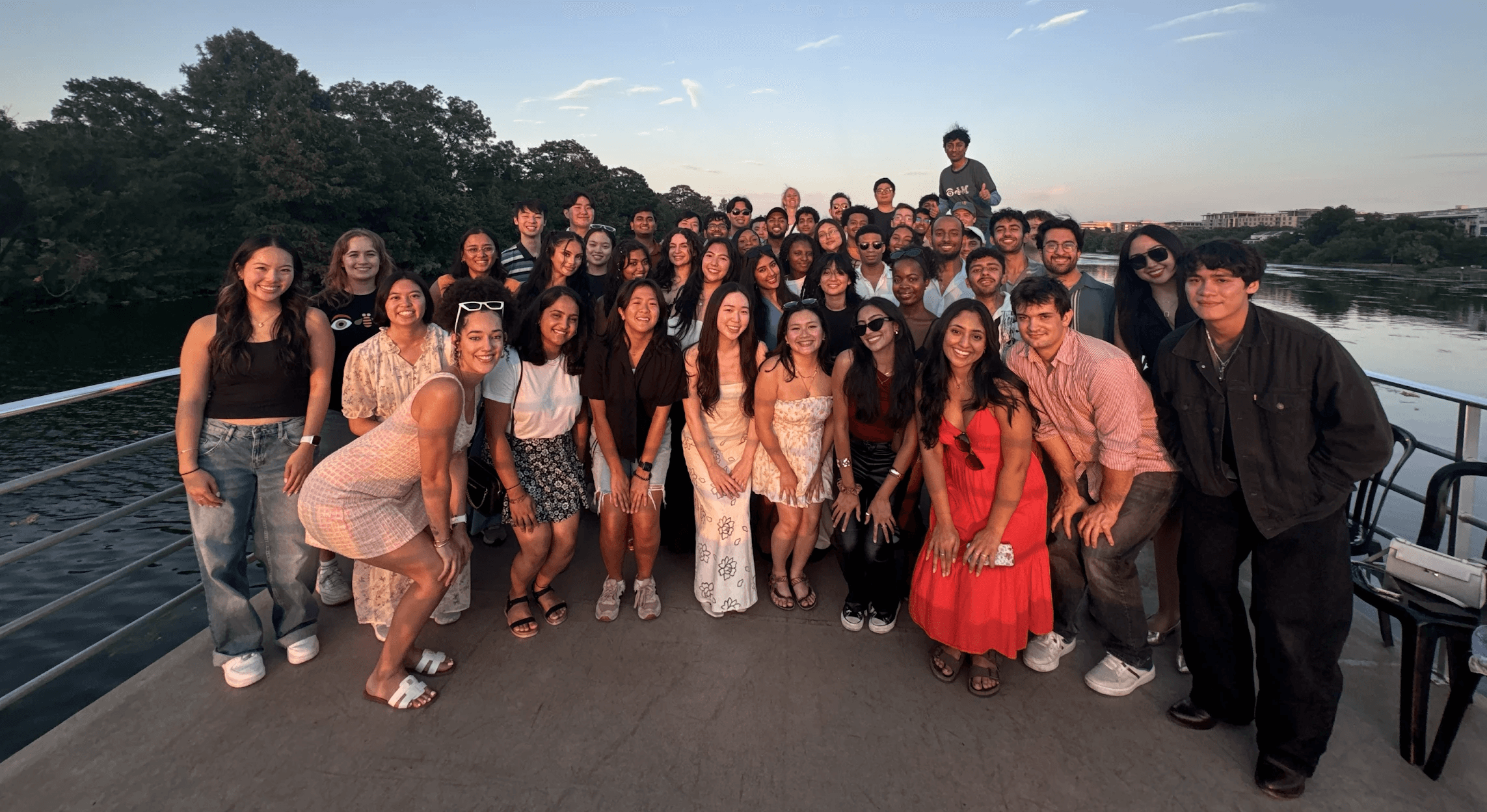
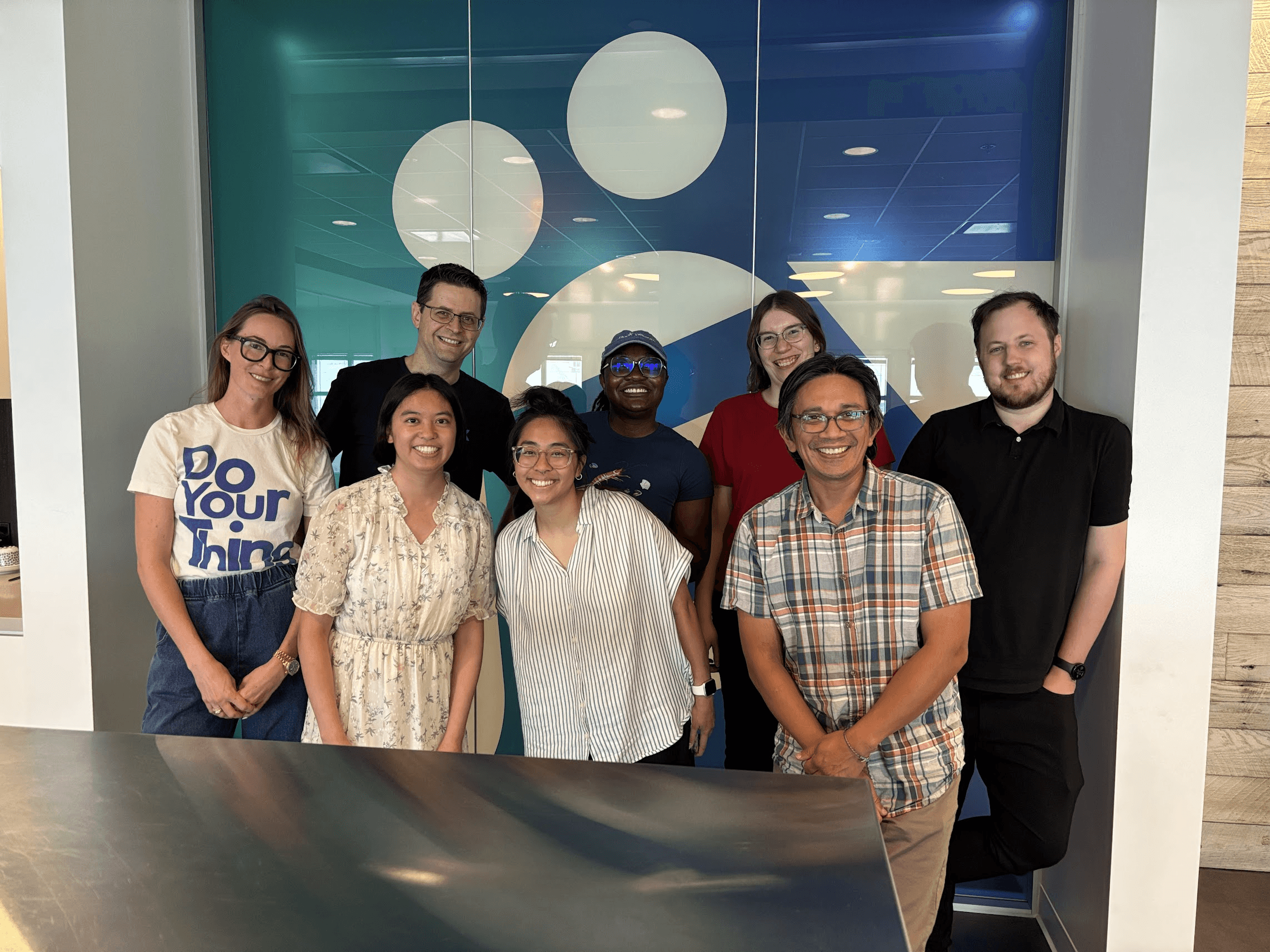
My Internship Experience


Next Project
Impact Beyond Designs:
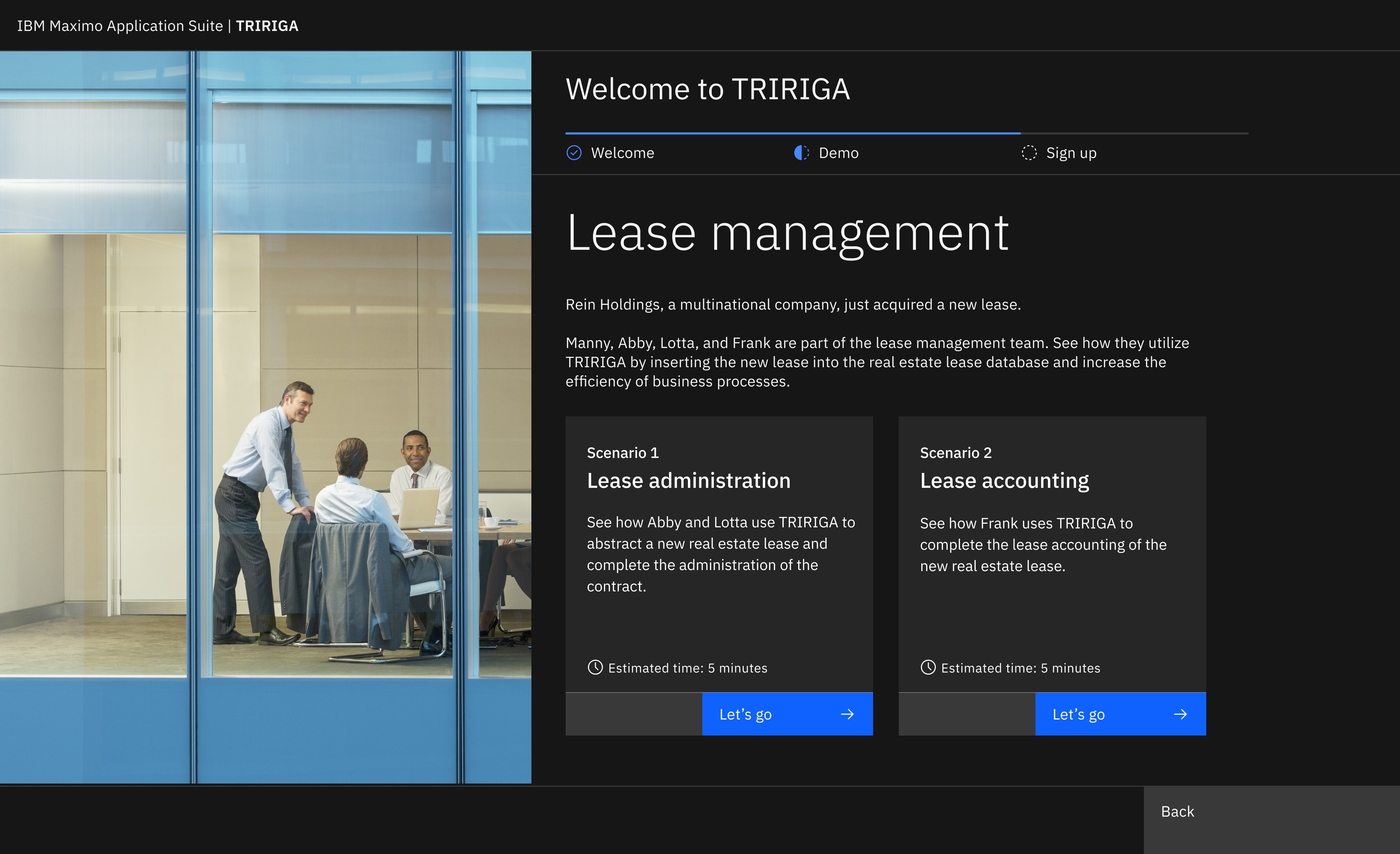
TRIRIGA Demo
UX Research